

How To Choose A Vacuum Pump Bottle?
When it comes to selecting a vacuum pump bottle, especially for packaging cosmetics, skincare products, or pharmaceuticals, the choice of material plays a crucial role. Among various materials, Polyethylene Terephthalate (PET) and Polypropylene (PP) are two of the most commonly used options. Understanding the characteristics, advantages, and limitations of these materials can help consumers and businesses make informed decisions. This article will delve into the details of PET and PP materials, providing a comprehensive guide on how to choose the right vacuum pump bottle.
Content
1. Characteristics of PET Material
2. Characteristics of PP Material
3. Factors to Consider When Choosing Between PET and PP Vacuum Pump Bottles
1. Characteristics of PET Material
PET is a thermoplastic polymer resin belonging to the polyester family. It is widely used in the packaging industry due to its excellent clarity, strength, and barrier properties. Bottles made of PET are transparent, allowing consumers to easily see the product inside. This transparency is highly desirable for products such as perfumes, body lotions, and facial serums, where the appearance of the product can enhance its marketability.
One of the key advantages of PET is its high tensile strength. It can withstand external pressures and impacts without easily deforming or breaking, ensuring the integrity of the vacuum pump bottle during transportation and storage. Additionally, PET has good chemical resistance, making it suitable for packaging a wide range of products, including those with acidic or alkaline components. For example, it can safely hold skincare products containing alpha-hydroxy acids (AHAs) or benzoyl peroxide without reacting with the product.
PET also offers good gas and moisture barrier properties. It helps prevent the ingress of oxygen, which can cause the oxidation of products like essential oils or vitamin C serums, thereby extending their shelf life. The moisture barrier function is equally important, especially for products that need to remain dry, such as certain powdered cosmetics or medications.
However, PET does have some limitations. It is sensitive to high temperatures. Prolonged exposure to heat can cause the PET bottle to warp or even release harmful substances. Therefore, it is not an ideal choice for products that need to be stored in high-temperature environments or for hot-fill applications.


2. Characteristics of PP Material
PP is another widely used thermoplastic in the packaging industry. It is known for its excellent heat resistance, chemical resistance, and flexibility. Unlike PET, PP bottles can come in various colors, including opaque and translucent options, providing more design flexibility for product packaging.
The outstanding heat resistance of PP makes it suitable for a wide range of temperature conditions. It can withstand high temperatures during the sterilization process in the pharmaceutical industry or hot-fill applications in the food and beverage sector. For example, PP vacuum pump bottles can be used to package hot-fill hand sanitizers or warm serums without the risk of deformation.
PP also exhibits superior chemical resistance, even better than PET in some cases. It can resist the corrosion of strong acids, alkalis, and organic solvents, making it an excellent choice for packaging industrial chemicals or highly concentrated skincare actives. Moreover, PP has good flexibility, which allows for more ergonomic designs of vacuum pump bottles. The flexible nature of PP also makes it less likely to shatter upon impact, enhancing the safety of the product during handling.
On the downside, PP generally has lower clarity compared to PET. While there are high-clarity PP variants available, they may not match the crystal-clear transparency of PET bottles. This can be a drawback when the visual appeal of the product inside is a significant selling point.
3. Factors to Consider When Choosing Between PET and PP Vacuum Pump Bottles

The nature of the product to be packaged is the primary consideration. For products that are sensitive to light and oxygen, such as high-end perfumes or antioxidant-rich serums, PET vacuum pump bottles may be a better choice due to their superior clarity and gas barrier properties. The transparency of PET allows consumers to appreciate the color and texture of the product, while its gas barrier function protects the product from degradation.
Conversely, for products that require heat resistance or have strong chemical components, PP vacuum pump bottles are more suitable. Pharmaceutical creams that need to undergo heat sterilization or hair dyes containing harsh chemicals are better packaged in PP bottles to ensure the stability and safety of the product.
Temperature Requirements
If the product needs to be stored or transported in extreme temperature conditions, the heat resistance of the material becomes crucial. PP vacuum pump bottles are ideal for products that may be exposed to high temperatures, such as products stored in hot climates or in vehicles during summer. In contrast, PET bottles should be avoided in such scenarios to prevent deformation and potential product contamination.
Cost is an important factor for both consumers and businesses. Generally, PET is more cost-effective to produce in large quantities, making it a popular choice for mass-market products. Its relatively lower production cost can be reflected in the final price of the packaged product, making it more affordable for consumers.
On the other hand, PP may be slightly more expensive due to its unique properties, such as heat resistance and enhanced chemical resistance. However, for products where these properties are essential, the higher cost of PP may be justified by the added value it provides in terms of product protection and performance.
Aesthetic and Design Requirements
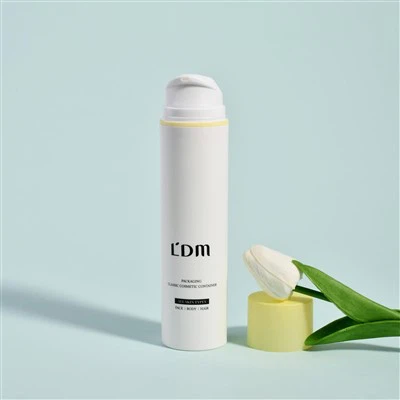
The visual appearance of the vacuum pump bottle can significantly impact the product's marketability. If a clear and transparent bottle is desired to showcase the product inside, PET is the obvious choice. Its high clarity can enhance the luxurious feel of high-end cosmetics or skincare products.
For products that require more color options or a matte finish, PP offers greater design flexibility. Brands can choose from a variety of colors and surface treatments to create a unique and eye-catching packaging design that stands out on the shelves.
Environmental Impact
With increasing environmental awareness, the recyclability of the material is also a key consideration. Both PET and PP are recyclable materials. PET is one of the most widely recycled plastics globally, with a well-established recycling infrastructure in many regions. Recycling PET helps reduce plastic waste and conserve resources.
PP is also recyclable, although its recycling rate may be relatively lower in some areas due to the complexity of separating it from other plastics. However, efforts are being made to improve the recycling of PP, and choosing a PP vacuum pump bottle can still contribute to sustainable packaging practices.
In conclusion, choosing the right vacuum pump bottle between PET and PP materials requires a comprehensive evaluation of multiple factors, including product type, temperature requirements, cost, aesthetic needs, and environmental impact. By understanding the unique characteristics of these two materials, consumers and businesses can make choices that not only meet their specific packaging requirements but also align with their sustainability goals. Whether it's the clarity and strength of PET or the heat resistance and flexibility of PP, each material has its own strengths, and the optimal choice depends on the specific needs of the product being packaged.