

How Do Airless Pump Bottles Work?
In the realm of modern packaging, airless pump bottles have emerged as a revolutionary innovation, especially for products like cosmetics, skincare, and pharmaceuticals. Unlike traditional containers that expose their contents to air, airless pump bottles provide a sealed environment, ensuring product integrity, extending shelf life, and enhancing user experience. But have you ever wondered how these ingenious containers work? Let's delve into the intricate mechanisms that make airless pump bottles function so effectively.
Content
- The Structure of Airless Pump Bottles
- The Working Principle
- Advantages of Airless Pump Bottles
- Applications of Airless Pump Bottles
- Challenges and Future Developments
The Structure of Airless Pump Bottles
To understand how airless pump bottles operate, it's essential to first examine their structure. An airless pump bottle typically consists of several key components: a bottle body, a piston, a spring, a dip tube, and a pump head. The bottle body serves as the main reservoir for the product, which can range from lotions and serums to creams and liquid foundations.
The piston is a crucial part, often located at the bottom of the bottle. It is designed to move upwards as the product is dispensed, ensuring that there is minimal air space within the bottle at all times. The spring, positioned beneath the piston, provides the necessary force to push the piston upward as the product is pumped out. This continuous upward movement of the piston helps maintain a vacuum - like environment inside the bottle, preventing air from entering.
The dip tube connects the product reservoir to the pump head. Its role is to channel the product from the bottom of the bottle to the pump mechanism for dispensing. The pump head, the part that users interact with directly, contains a valve system that controls the flow of the product and prevents air from getting back into the bottle.
The operation of airless pump bottles is based on the principles of pressure and vacuum. When the user presses down on the pump head, the first action is the compression of the spring - loaded piston mechanism inside the pump head. This compression forces the product through the dip tube and out of the bottle.
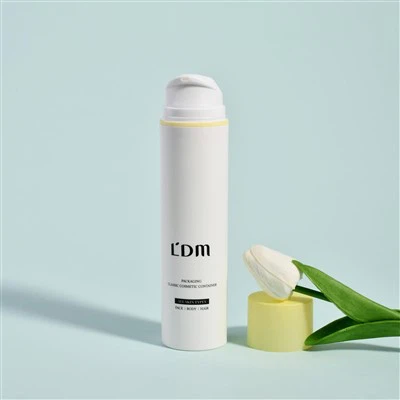
As the product is pushed out, the piston at the bottom of the bottle begins to move upward. The upward movement of the piston creates a space that was previously occupied by the dispensed product. Since the bottle is designed to be airtight, no air can rush in to fill this space. Instead, the spring beneath the piston exerts a constant upward force, continuously pushing the piston up as more product is dispensed. This process maintains a negative pressure, or vacuum, inside the bottle.
The valve system within the pump head plays a vital role in the operation. When the pump head is released after dispensing the product, the valve closes, preventing any air from entering the bottle through the pump mechanism. This ensures that the product remains isolated from the external environment, protecting it from oxidation, contamination by bacteria, and other external factors that could degrade its quality.
For example, in the case of skincare serums that are rich in active ingredients such as vitamins C and E, exposure to air can cause these ingredients to oxidize, reducing their effectiveness. Airless pump bottles eliminate this risk by keeping the serum in a sealed, air - free environment, allowing users to enjoy the full benefits of the product throughout its shelf life.
Advantages of Airless Pump Bottles
The unique working mechanism of airless pump bottles offers several significant advantages. One of the most notable benefits is product preservation. By preventing air from coming into contact with the product, airless pump bottles slow down the rate of oxidation, microbial growth, and evaporation. This is particularly important for products that are sensitive to environmental factors, such as certain medications, high - end skincare products, and perfumes.
Another advantage is the precise dosage control. The pump mechanism dispenses a consistent amount of product each time, which is not only convenient for the user but also helps in cost - management. For instance, in the case of expensive anti - aging creams, users can be sure that they are using the right amount of product with each pump, avoiding waste.
In addition, airless pump bottles are more hygienic compared to traditional open - top containers. Since there is no need to dip fingers into the product, the risk of introducing bacteria from the hands into the container is eliminated. This is especially crucial for products that are applied to the skin or used for medical purposes, as it reduces the likelihood of infections or adverse reactions.
Applications of Airless Pump Bottles
The functionality and advantages of airless pump bottles have led to their widespread use across various industries. In the cosmetics industry, they are commonly used for packaging foundations, BB creams, moisturizers, and serums. Makeup artists and beauty enthusiasts appreciate the convenience and hygiene that airless pump bottles offer, as well as the ability to keep their products in pristine condition.
In the pharmaceutical industry, airless pump bottles are used for dispensing topical medications, such as creams and ointments. The airtight design helps maintain the efficacy of the active ingredients in the medications, ensuring that patients receive the full therapeutic benefits.
The personal care industry also benefits from airless pump bottles. Products like hand sanitizers, body lotions, and hair serums are often packaged in these bottles. The ease of use and precise dispensing make them a popular choice among consumers.
Challenges and Future Developments
While airless pump bottles offer numerous benefits, they also face some challenges. One of the main challenges is the cost of production. The complex design and manufacturing process of airless pump bottles make them more expensive compared to traditional packaging options. This higher cost is often passed on to the consumers, which can make products packaged in airless pump bottles relatively more expensive.
Another challenge is the recyclability of airless pump bottles. Due to their multi - component structure, they can be more difficult to recycle compared to single - material containers. However, as environmental concerns grow, the industry is actively researching and developing more sustainable and recyclable airless pump bottle designs.
In the future, we can expect to see further advancements in airless pump bottle technology. Innovations may include more efficient piston and valve designs to improve the dispensing process, as well as the use of new materials that are both cost - effective and environmentally friendly. Additionally, smart airless pump bottles with features such as dosage tracking or product expiration indicators may become more common, enhancing the user experience even further.


In conclusion, airless pump bottles are a remarkable example of how packaging technology can enhance product performance, user experience, and hygiene. Their unique working mechanism, based on pressure and vacuum principles, ensures that products remain fresh and protected from external contaminants. Despite the challenges they face, the future of airless pump bottles looks promising, with continuous innovation expected to make them even more efficient, sustainable, and user - friendly.