

Top 10 Empty Deodorant Containers Manufacturers In The World
China has a broad cosmetic packaging supply chain, with manufacturers offering standard deodorant containers and customized packaging for bulk orders. When comparing suppliers, buyers should evaluate container structure, material options, minimum order quantities (MOQs), customization capabilities, sample availability, and production lead times. This guide introduces ten Chinese manufacturers and provides practical purchasing advice to help buyers prepare their sourcing requirements.
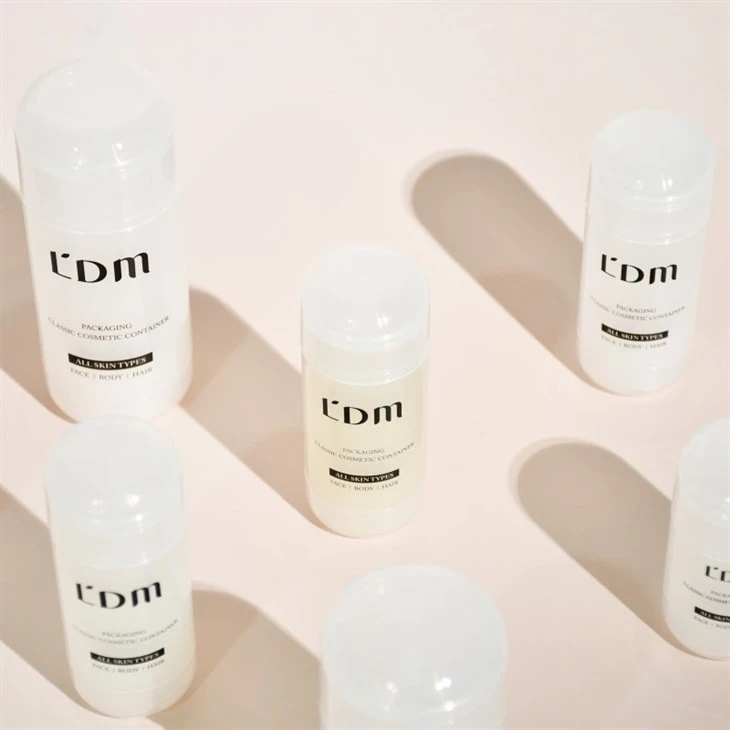
Top 10 Empty Deodorant Containers Manufacturers in China
|
No. |
Manufacturer |
Location |
Main Product Focus |
|---|---|---|---|
|
1 |
Shaoxing Longderm Plastic Co., Ltd. |
Shaoxing, Zhejiang |
Deodorant containers and cosmetic packaging |
|
2 |
HCC Packaging |
Ningbo, Zhejiang |
Deodorant stick containers |
|
3 |
Zhejiang Cosme Industry |
Zhejiang |
Plastic deodorant stick containers |
|
4 |
Ruipack |
Hangzhou, Zhejiang |
Cosmetic and personal care packaging |
|
5 |
Sofine Packaging |
Shantou, Guangdong |
Plastic deodorant containers |
|
6 |
Keyo Pack |
China |
Custom deodorant stick packaging |
|
7 |
MGG Group |
China |
Personal care packaging |
|
8 |
Homchoe Packaging |
Dongguan, Guangdong |
Deodorant tubes and stick packaging |
|
9 |
BEYAQI |
Hangzhou, Zhejiang |
Cosmetic and deodorant packaging |
|
10 |
Maypak |
China |
Cosmetic packaging components |
This list is a starting point for supplier research rather than a verified ranking by market share or production capacity. Buyers should confirm each company's current deodorant packaging range, manufacturing arrangements, and commercial terms before placing an order.
Shaoxing Longderm Plastic Co., Ltd.
Longderm, officially Shaoxing Longderm Plastic Co., Ltd., is a Chinese cosmetic packaging manufacturer established in 2016. Its product range includes cosmetic bottles, airless pump bottles, deodorant containers, and cosmetic jars for beauty and personal care applications.
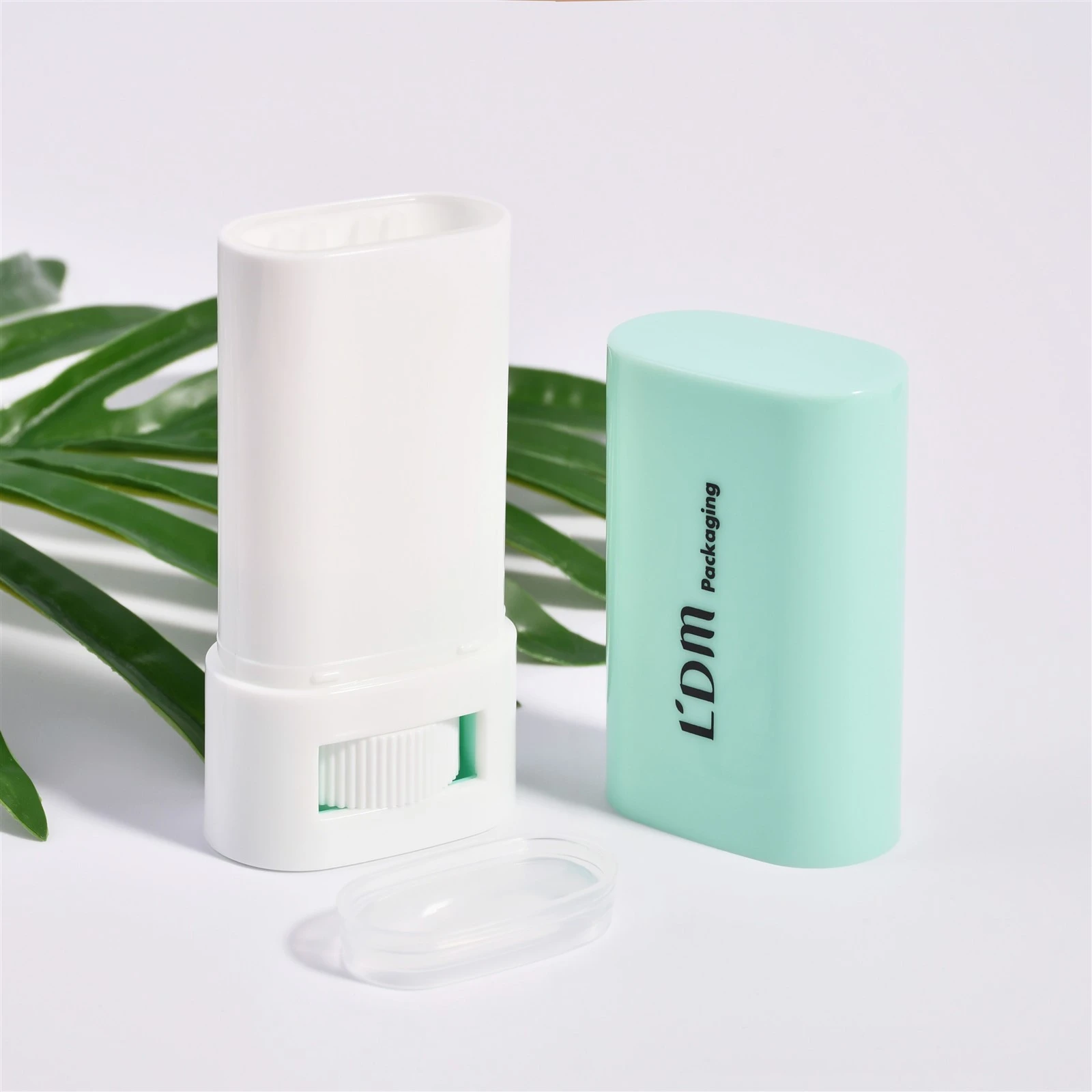
Longderm's deodorant packaging options include stick-style containers with an outer body, internal product platform, rotating base, and protective cap. The mechanism moves the solid product upward as the base turns, allowing consumers to apply it directly.
Packaging support for buyers includes:
Product selection: Compare available container designs, dimensions, and capacities.
Appearance customization: Discuss suitable colors, logo printing, and other available surface finishes.
Specification confirmation: Align container structure, component configuration, and filling requirements before ordering.
Sample evaluation: Check dimensions, assembly, and dispensing performance before approving mass production.
Longderm can also be considered by buyers sourcing deodorant containers alongside other cosmetic packaging products. Available models, customization options, minimum order quantities, and lead times should be confirmed for each project.
HCC Packaging
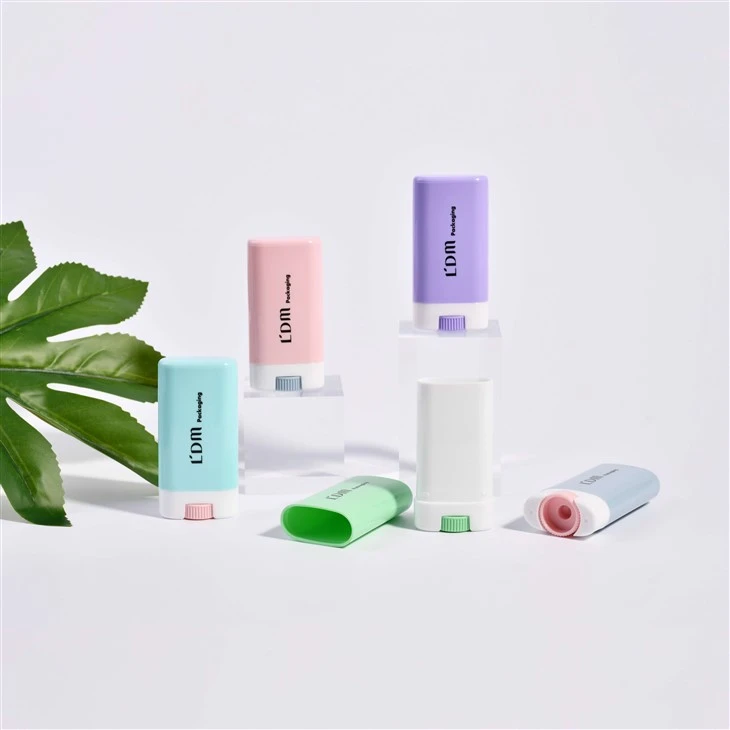
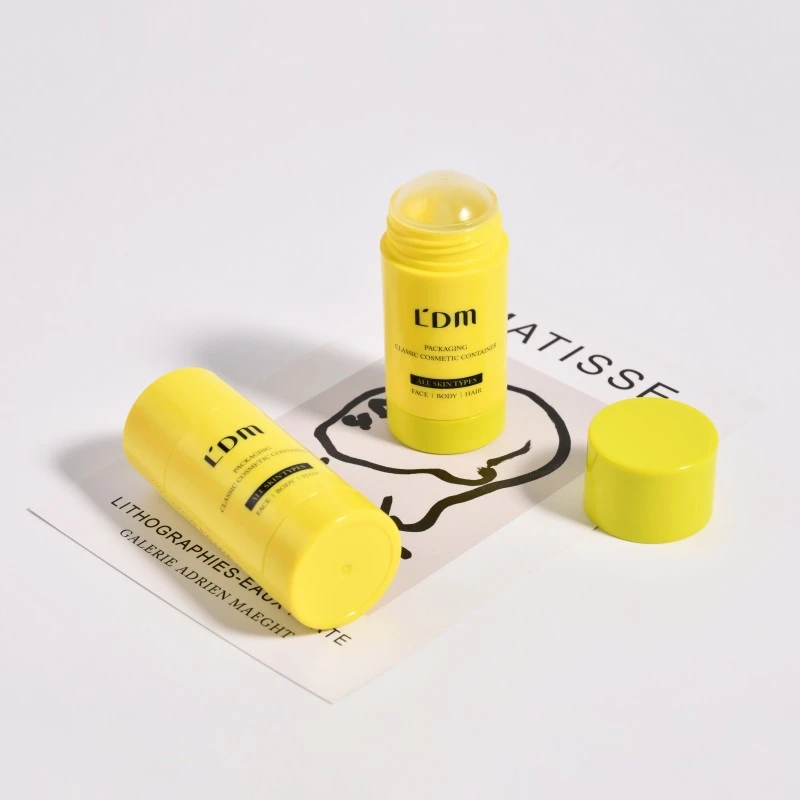
HCC Packaging, based in Ningbo, Zhejiang, offers cosmetic packaging that includes empty deodorant stick containers in different shapes and configurations. Buyers can compare its available models according to capacity, dispensing structure, and customization requirements.
Zhejiang Cosme Industry
Zhejiang Cosme Industry supplies cosmetic packaging, including plastic deodorant stick containers. Buyers should confirm current product specifications, available materials, decoration options, and custom-mold arrangements.
Ruipack
Ruipack, associated with Hangzhou Ruijing Packaging Co., Ltd., supplies cosmetic and personal care packaging. Buyers can investigate its current product range for deodorant containers and related packaging formats.
Sofine Packaging
ShanTou Sofine Packaging Materials Co., Ltd., based in Shantou, Guangdong, supplies plastic cosmetic packaging, including deodorant stick containers. Buyers should check available shapes, capacities, materials, and printing options for the specific model.
Keyo Pack
Keyo Pack offers cosmetic packaging products, including deodorant stick packaging options. Buyers should verify its current manufacturing arrangements, available designs, and customization services before requesting a quotation.
MGG Group
MGG Group supplies cosmetic and personal care packaging, with product options that may include deodorant containers. Buyers should confirm the exact container formats, production location, and OEM services available for their project.
Homchoe Packaging
Homchoe Packaging, based in Dongguan, Guangdong, supplies cosmetic packaging and deodorant stick containers. Its available designs and decoration options should be confirmed according to the buyer's filling process and branding requirements.
BEYAQI
BEYAQI is a Chinese cosmetic packaging supplier with products covering several personal care packaging categories. Buyers can check its current deodorant stick and roll-on container offerings, including available sizes and customization options.
Maypak
Maypak supplies cosmetic packaging components, including bottles, jars, and other personal care packaging formats. Buyers should verify whether its current product range includes the specific empty deodorant container required.
What Types of Empty Deodorant Containers Can Buyers Source?
Twist-up containers are commonly used for solid deodorants and similar stick products. A rotating base moves an internal platform upward, exposing more product as needed.
Buyers should check the container's fill weight, dimensions, internal mechanism, and filling direction. Smooth rotation and stable product advancement are important functional requirements.
Roll-on packaging typically consists of a bottle, rolling ball, retaining component, and outer cap. It is commonly used for liquid or gel deodorant formulations.
Important considerations include ball movement, closure fit, formula compatibility, and leakage resistance. The actual formula should be tested where necessary because viscosity can affect dispensing performance.
Refillable containers use a replacement cartridge or another refill mechanism to reduce the need to discard the entire package after use. The outer case and refill must be designed to fit together securely.
Buyers should confirm how the refill is installed and removed, whether replacement units are available, and whether the structure can withstand repeated use.
How Should Buyers Select the Right Container Structure?
Start with the formula and dispensing method. Solid deodorants usually require a stick container with a lifting mechanism, while liquid products may require a roll-on bottle.
|
Container Type |
Typical Formula |
Main Components to Check |
|---|---|---|
|
Twist-up stick |
Solid deodorant |
Body, internal platform, rotating base, cap |
|
Push-up stick |
Solid stick product |
Tube body, movable base, opening, cap |
|
Roll-on bottle |
Liquid or gel deodorant |
Bottle, roller ball, retaining component, cap |
|
Refillable stick |
Solid formula with a replacement unit |
Outer case, refill, locking structure |
The structure must also match the filling equipment. Buyers should provide the intended product type and target fill weight before requesting a quotation.
Which Materials Should Buyers Consider?
PP is commonly used for plastic deodorant stick containers, while other plastics may be available depending on the design. The right material depends on formula compatibility, structural requirements, appearance, and storage conditions.
Buyers should evaluate:
Formula compatibility: Check whether ingredients may interact with the container or its components.
Structural performance: Inspect the body, base, and internal mechanism for deformation or uneven movement.
Appearance: Confirm color, surface finish, and decoration requirements.
Testing needs: Arrange compatibility testing when the formula contains oils, fragrances, solvents, or other potentially reactive ingredients.
Material names alone do not establish suitability. The complete package should be evaluated against the actual formula and intended use.
How Do MOQ and Unit Price Affect Purchasing Decisions?
MOQ varies according to the container model, production process, decoration requirements, and whether the product uses a standard or custom mold. A customized package may have a different MOQ from an undecorated standard model.
When comparing quotations, buyers should confirm whether the price includes the body, base, internal mechanism, and cap. Printing, special finishes, tooling, sample charges, and freight may be quoted separately.
The most useful comparison is based on identical specifications and order quantities. A lower unit price may not mean a lower total cost if additional tooling or component purchases are required.
What Sample Tests Should Be Completed Before Mass Production?
Sample approval should cover appearance, dimensions, assembly, and functional performance.
For twist-up containers, buyers should check whether the base rotates smoothly and whether the internal platform advances evenly. Roll-on bottles require particular attention to ball movement, closure fit, and leakage.
Recommended checks include:
- Dimensional inspection: Confirm height, diameter, opening dimensions, and other critical measurements.
- Component fit: Check that the body, base, and cap assemble correctly.
- Functional testing: Observe rotation, product advancement, or roll-on dispensing.
- Filling evaluation: Confirm that the container suits the planned filling process.
- Formula compatibility: Monitor for leakage, deformation, discoloration, or other changes where applicable.
- Decoration inspection: Compare the finished sample with the approved logo, color, and surface-finish references.
Buyers should document the approved sample and acceptance criteria before authorizing bulk production.
How Can Buyers Evaluate a Manufacturer's Production Capability?
A product catalog alone does not establish whether a supplier can meet a particular order's requirements. Buyers should verify the manufacturing source and ask about the production process for the selected container.
Important points include:
- Whether the supplier manufactures the container directly or sources it from another factory.
- Which components are produced in-house and which are purchased externally.
- Whether samples come from the actual production model.
- How dimensions, appearance, assembly, and material consistency are inspected.
- Whether the supplier can meet the required order volume and repeat-order schedule.
- How production changes and quality issues are handled.
For larger or recurring orders, a factory audit or third-party inspection may provide additional assurance.
Previous: No Information